
Why is exercise important for cancer patients?
After receiving a diagnosis of cancer, many people feel anxiety and fear.
Then they may start to do a lot of research about treatments and the side effects of anticancer drugs.
In such a situation, you may find information that you should exercise. However, before you actually start exercising, you may have some questions and concerns.
In this issue, we will explain in detail why exercise is important for cancer patients, what kind of exercise is recommended, and precautions to take when starting exercise.
Exercise is Essential for Cancer Patients
Many recent studies have pointed out the importance of exercise for cancer patients. I was concerned about whether cancer patients should be allowed to exercise, but my research has cleared up my concerns, and I am now encouraging others to exercise as much as possible.

improving immunity
Exercise activates immune cells such as NK cells and lymphocytes, and enhances the immunity of the entire body. Improved immunity is expected to inhibit the proliferation and metastasis of cancer cells. (This enhancement of immunity is said to be very effective in cancer treatment & prevention.)
reduction of fatigue
Fatigue caused by cancer treatment can greatly reduce a patient’s quality of life. Exercise is effective in reducing fatigue by inhibiting the accumulation of fatiguing substances and improving energy metabolism.
You may have experienced the feeling of being tired but more refreshed after exercising and sweating.

maintenance of muscle strength and stamina
Treatment such as surgery and radiotherapy may cause loss of muscle strength and stamina. Exercise can help maintain or improve muscle strength and stamina, making daily activities smoother and speeding up recovery of strength after treatment.
Rehabilitation is often done before leaving the hospital, but many people stop doing it after returning home due to pain or discomfort.
Try to continue at home even if there is some pain or discomfort. (Muscle strength can quickly deteriorate after a week of no exercise.)
mental improvement
Exercise promotes the secretion of serotonin and dopamine, substances in the brain that improve mood. It also provides a sense of accomplishment and fulfillment, which reduces stress and leads to mental stability.
If possible, it will be more enjoyable to continue exercising if you can do it with someone else instead of alone!

Recommended Exercise for Cancer Patients
Walking←(Start here first)
Walking is the easiest exercise to start. No special place or equipment is needed, and you can continue at your own pace. Think about your own walking style and how you can continue walking, such as getting off at one station before the nearest station and walking for one station.
Jogging
Jogging is a higher intensity exercise than walking. It improves cardiopulmonary function and burns more calories. (Since many people do not continue if they suddenly start with jogging, it is a good idea for people who have an exercise habit before to start again with jogging.

Swimming
Swimming has the advantage of being an exercise that uses the entire body and is less stressful on the joints.
Start with rehabilitation, starting with simple activities such as walking in the water instead of swimming.
The buoyancy of the water makes swimming one of the easiest exercises for beginners to begin with.
Strength Training
Strength training not only improves muscle strength and stamina, but also helps prevent osteoporosis.
This is really only recommended for advanced swimmers.
First, rehabilitate -> then strength training should be done after you are able to perform as well as you did before.
There is no need to rush.
Take your time to recover, and then do it.

What to Consider When a Cancer Patient Begins Exercising
Consult your doctor
Before starting exercise, be sure to consult your doctor!
He or she can provide guidance on the appropriate type and intensity of exercise according to your physical condition and treatment status. Never start on your own judgment.
Do not overexert yourself.
As mentioned above, avoid doing long hours or high intensity exercise from the beginning. It is important to start with short time and low intensity at first and gradually increase the exercise time. There is no need to rush. Start gradually while consulting with your body.
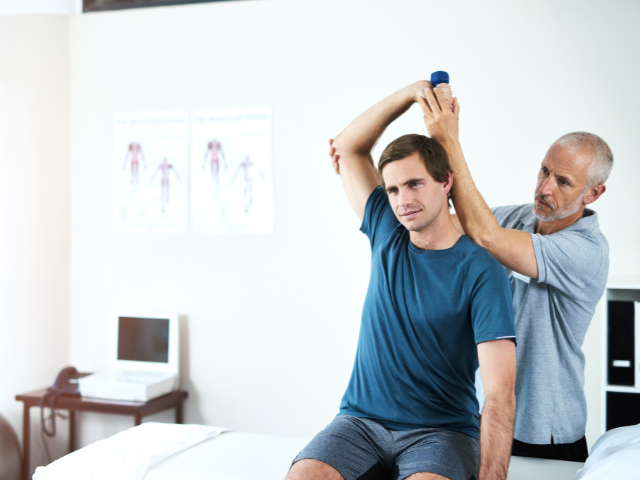
Stop if you feel strong pain or discomfort
If you experience pain or discomfort during exercise, do not force yourself to stop. Remember to tell your doctor when, where, what you were doing, and what kind of pain or discomfort you were experiencing.
Stay Hydrated
Hydrate frequently during exercise.

Finally, enjoy your exercise!
It is very important to enjoy exercise in order to continue to exercise.
Some people are in a hurry to get back on track for rehabilitation, thinking they will recover quickly. Instead, first of all, be aware that you should continue to enjoy yourself!
You can exercise while listening to your favorite music or exercising with a friend.
And be sure to keep going!